In today's digital economy, businesses need a reliable online payment system to stay competitive. It’s nearly impossible to succeed without it! With more consumers shopping online every year, with 2.71 billion people expected to shop online in 2024 compared to 2.37 billion in 2020, having a simple and secure online payment system is essential to increase conversions and build customer trust.
But what is an online payment system, how does the online payment process work, and why does it matter for your business? In this blog, we'll break it all down.
What’s in this blog?
What is an online payment system?
How do online payment systems work?
Step-by-step online payment process
Why is a seamless online payment process important?
What are the benefits of an online payment system?
How to process payments online with Nomupay
What is an online payment system?
An online payment system is a digital solution that allows businesses to accept and process payments online securely. It facilitates the transfer of funds between customers and merchants over the internet, enabling shoppers to pay for goods or services using credit cards, debit cards, digital wallets or alternative payment methods.
A payment system online typically combines several technologies, including payment gateways, payment processors, encryption and fraud prevention tools, to ensure transactions are fast and secure.
Whether you run an ecommerce store, subscription platform or online marketplace, having the right online payment system helps create a smoother customer experience while protecting sensitive payment data.
How do online payment systems work?
Although the technology behind an online payment system is complex, the actual online payment process takes just a few seconds.
Before explaining how to process online payments, it’s important to understand the four key parties involved in a transaction:
Merchant: The business or ecommerce website accepting payment.
Cardholder: The customer making the online purchase.
Acquiring bank: The financial institution that processes the payment on behalf of the merchant, e.g., Nomupay.
Issuing bank: The customer’s bank or card provider, e.g., Visa and MasterCard.
When these parties work together, businesses can process payments online quickly, securely and efficiently.
Step-by-step online payment process
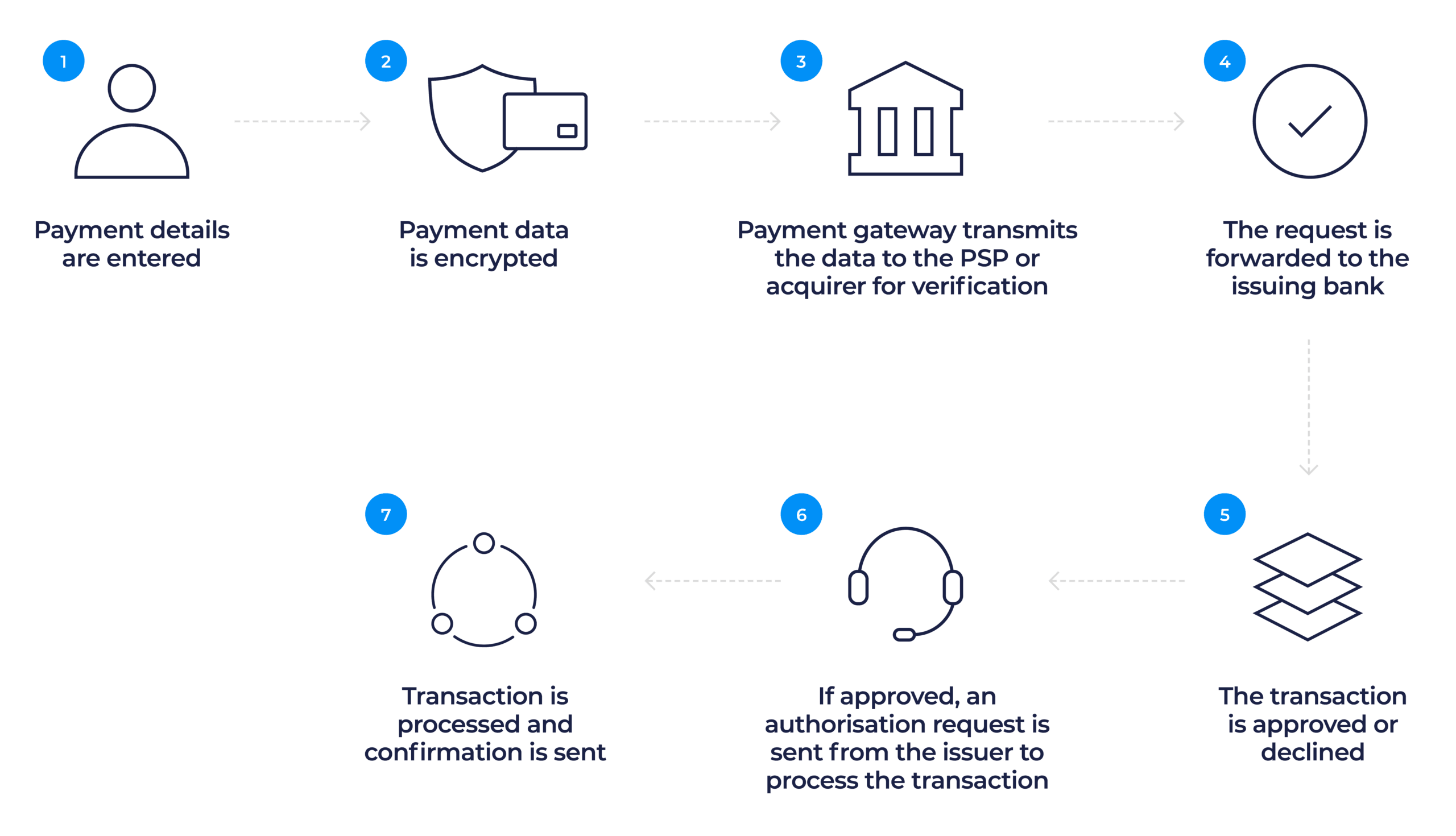
Understanding the online payment process can help businesses optimise checkout experiences and improve customer confidence. So here’s a step-by-step flow of how the online payments process works.
Customer enters their payment details: The cardholder initiates the transaction by entering their payment information, such as credit card details or digital wallet credentials, into the online payment form provided by the merchant.
Payment data is encrypted: The online payment system encrypts the customer’s payment data using secure encryption protocols, such as SSL (Secure Sockets Layer), to keep the cardholder's details secure.
Payment verification begins: The encrypted payment data is transmitted securely via the payment gateway to the payment processor or acquiring bank. At this stage, the system checks whether the card details are valid, sufficient funds are available and if the transaction appears legitimate.
Authorisation request is sent: The payment gateway forwards the request to the customer’s issuing bank for approval. This step is a critical part of the online payment process because it determines whether the transaction can proceed
Transaction is approved or declined: The customer's bank or card issuer reviews the authorisation request and either approves or declines the transaction based on various factors, including available funds, account status and fraud risk.
Transaction is processed: If the transaction is approved, the customer's bank or card issuer sends an authorisation code via the payment gateway back to the payment processor, indicating that the transaction can proceed. The transaction is then processed, deducting the purchase amount from the customer's account and transferring it to the merchant's account.
Confirmation is sent: Once the transaction is successfully processed, the payment gateway sends a confirmation message to the merchant's website, indicating that the payment has been received and the order can be fulfilled. Alternatively, the gateway will send a declined message.
Why is a seamless online payment process important?
A complicated checkout experience can negatively impact conversion rates and customer satisfaction.
Customers expect online payment systems to be:
Fast
Secure
Mobile-friendly
Easy to use
Reliable across multiple payment methods
If the online payment process feels slow or confusing, customers may abandon their purchase before completing checkout.
Optimising your payment system online can improve engagement rates, reduce friction and encourage repeat business.
What are the benefits of an online payment system?
We’ve already mentioned that an online payment system is crucial to the success of an ecommerce business, but why? Let’s take a look at the numerous advantages of an online payment system and why you need one:
Increased sales: By offering customers a convenient way to pay for their purchases online, you can attract more customers anywhere in the world. A smooth online payment process also helps reduce basket abandonment and improve conversion rates.
Improved customer experience: Customers want flexible and convenient payment options. Modern online payment systems support: - Credit and debit cards - Digital wallets - Buy now, pay later solutions - Local payment methods Providing multiple payment methods can improve customer satisfaction and engagement.
Enhanced security: Online payment systems employ advanced security measures, such as encryption and fraud detection, to protect sensitive customer information and reduce the risk of fraud.
Global reach: A scalable payment system online can reach customers beyond your local market and cater to a global audience, expanding your business opportunities on an international scale.
Reduced administrative burden: Automating the online payment process can streamline your administrative tasks, saving you time and resources, so you focus your efforts in other areas of your business.
Have we convinced you to invest in an online payment system yet?
How to set up an online payment system with Nomupay
Setting up an online payment system for your business involves several steps, including:
Choosing a reliable payment processor to bring it all together.
However, if you focus on finding an ideal payment processor first, like Nomupay, we will do all the legwork for you so you can start accepting payments faster.
It’s safe to say that implementing an online payment system is essential for merchants looking to stay competitive in today's digital marketplace. By understanding how online payment systems work and leveraging the right technology, you can enhance the shopping experience for your customers, increase sales and grow your business.