FX Payments Optimisation: A Guide for Brokers and Prop Firms Ready to Scale
Monday 6th July 2026
Written by Faye
As the global market becomes increasingly interconnected and cross-border payments are now the norm, being able to successfully manage forex payments is an operational must rather than a nice-to-have. For brokers and prop firms, FX payments touch almost every part of the business: client funding, trader payouts, partner settlements and treasury. Get it right and it becomes a quiet advantage. Get it wrong and it shows up in your margins, your client experience and your ability to grow.
The importance of optimising FX payments
Optimising how you handle FX payments isn't just a back-office exercise. It changes how your business performs. Here are just a few reasons why you should consider looking into how you manage FX payments.
Reduce costs and leakage: Every FX conversion carries a cost, whether that's a wide spread, a hidden fee or a delay that exposes you to rate movement between initiation and settlement. At the volumes a mature brokerage or prop firm deals with, these small losses add up to a real drag on margins over a year.
Minimise operations: Manual reconciliation, multiple banking relationships and ad hoc processes all take time away from the parts of the business that actually drive growth. The more your payment processes are standardised, the less operational overhead you carry as transaction volumes increase.
Mitigate risk: Currency volatility, settlement delays and compliance gaps all sit within FX payments. Addressing them properly protects you from losses and regulatory issues that have nothing to do with trading performance and everything to do with how money moves.
Retention: For traders and clients, getting paid quickly, accurately and in the currency they expect is part of the overall experience you provide. Payment friction is one of the simplest ways to lose a good client or trader to a competitor who has solved this.
Common challenges
FX payments can't be an afterthought. They come with their own risks and challenges, and if left unaddressed, they can become the reason you lose revenue and custom rather than the operational strength they should be.
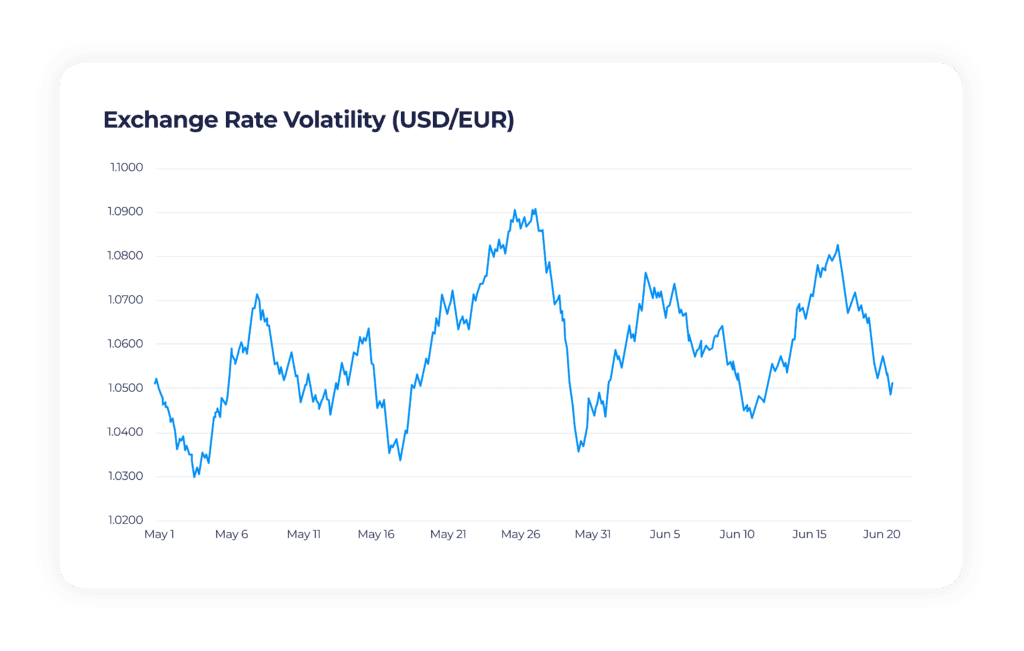
Exchange rate volatility: Rates can move significantly between the moment a payment is initiated and the moment it settles. Without a strategy in place, that movement is either absorbed as a loss or passed on to the client, neither of which is sustainable long-term.
Lack of visibility: If you can't see where a payment is in its lifecycle, or what rate and fees were actually applied, you can't manage it. This is particularly costly at scale, when small discrepancies across thousands of transactions are difficult to trace and even harder to explain to a client.
Regulatory compliance: Cross-border payments mean operating across multiple regulatory regimes at once. Licensing requirements, reporting obligations and anti-money laundering checks all vary by market, and falling short in any one of them can put your operating licence at risk.
Banking infrastructure limitations: Traditional banking rails weren't built for the speed or volume that modern brokers and prop firms need. Cut-off times, correspondent banking delays and limited currency coverage can all slow down payouts that your clients expect to be near-instant.
Risk management: Holding multi-currency exposure without a clear hedging or treasury approach leaves your business exposed to market movements you have no control over, on top of the trading risk you're already managing.
Inefficient operations: Reconciling payments manually across multiple providers and currencies is slow, error-prone and difficult to scale. What works at a smaller volume often breaks down once the business grows.
Strategies for optimising FX payments
Knowing the risks is one thing. Putting the right strategies in place is what actually protects your margins and keeps payments running smoothly as the business grows. Here are some of our top tips to optimise Forex payments:
Hedging techniques: Forward contracts, options and other hedging tools allow you to lock in rates and protect margins from currency swings, rather than leaving outcomes to chance.
Multi-currency accounts: Holding and settling balances in multiple currencies reduces the number of conversions you need to make, cuts down on fees and gives you more control over timing.
Automation: Automating reconciliation, payment initiation and reporting removes manual error and frees your operations team to focus on growth rather than admin. It also gives you the consistency you need as transaction volumes increase.
Netting: Consolidating multiple incoming and outgoing FX flows so only the net difference is actually converted. This reduces the number of conversions (and the fees that come with each one) when you're settling with the same counterparties or currencies repeatedly.
Rate monitoring and timing: Using real-time rate alerts or forecasting tools to time larger conversions, rather than converting on a fixed schedule regardless of market conditions.
Consolidated reporting: As volumes grow, having one team or system with a clear view of all currency exposure, across accounts and entities, makes it easier to act on the risks and opportunities the other strategies above are designed to address.
Key features to look for in an FX payment service provider
If you're evaluating FX providers to support the next stage of growth, a few features matter more than the rest:
Transparent FX rates: clear, real-time pricing with no hidden markups, so you always know the true cost of a transaction.
Global capabilities: coverage across the markets and currencies your clients and traders actually operate in.
Multi-currency support: the ability to hold, send and receive funds in multiple currencies without unnecessary conversions.
Alternative payment methods (APMs): local payment options beyond traditional bank transfers and cards, which can matter significantly in certain regions.
Mass and flexible payouts: the ability to process large volumes of payouts efficiently, whether that's daily trader payments or partner settlements, without manual workarounds.
Bringing it together
FX payments will only become more central to how brokers, traders and prop firms operate as the business grows. The firms that treat this as a strategic priority, rather than a background process, are the ones that protect their margins, stay compliant across markets and keep their clients and traders loyal. The right combination of strategy and provider makes that possible without adding complexity to the rest of the business.