Cardinity is now part of


Southeast Asia is rapidly becoming one of the most dynamic payments markets in the world. So, if you’re not already considering expanding into the region…why not? For merchants in Europe and the United States with expansion into the region on their roadmap, it’s important you understand its unique infrastructure.
At the centre of its growth is the rise of real-time payment systems, supported by a distinctly wallet-first consumer behaviour, Government-led innovations and the increasing cross-border connectivity. Together, these forces are reshaping how money moves across the region and redefining what a successful checkout experience looks like.
Across Southeast Asia, governments and central banks have invested heavily in real-time payment rails. Systems such as PayNow in Singapore, PromptPay in Thailand and DuitNow in Malaysia have made instant bank-to-bank transfers a standard part of everyday commerce.
For consumers, this means payments that settle in seconds rather than days. For merchants, it offers faster access to funds, lower transaction costs and a credible alternative to traditional card networks.
Judith Loh, Nomupay’s SVP Sales for APAC, says: “What makes Southeast Asia particularly interesting to me is its pace of adoption. In many ways, the region has skipped a generation and moved straight from cash to real-time, mobile-first systems, bypassing traditional card infrastructure altogether. You can see that play out more broadly across APAC too where digital wallets made up 77% of ecommerce and 63% of POS value last year.”
This has created a payments environment that is not only modern, but structurally different from Western markets.
To understand real-time payments in Southeast Asia, it is essential to recognise that consumers do not default to cards. Instead, mobile wallets and bank-linked apps sit at the centre of the payment experience.
Wallets such as GrabPay, GoPay and ShopeePay are deeply embedded in everyday life, from transport and food delivery to bill payments and peer-to-peer transfers.
The real-time payment infrastructure underpins many of these wallets. Users can top up instantly, transfer funds seamlessly and pay merchants via QR codes or in-app flows. The distinction between a bank transfer and a wallet payment is often invisible to the consumer.
For Western merchants, this creates a critical challenge. A checkout experience optimised for cards will feel unfamiliar and potentially inconvenient to local consumers.
“Supporting wallets and real-time payment methods is not an enhancement, it is an absolute must if you want to succeed in the region.” – Judith Loh
Many Western merchants were introduced to QR codes during COVID-19, when contactless experiences became a necessity. While some have continued to offer QR-based payments, others have largely reverted to pre-pandemic habits.
In Southeast Asia, however, the story is very different. QR codes were already gaining traction well before the pandemic and have since become a core part of the payments landscape rather than a temporary solution.
In markets such as Indonesia, Thailand and Singapore, QR payments now function as a universal acceptance method. From large retailers to small street vendors, merchants can accept payments by displaying a single QR code that connects to multiple wallets and bank apps. This has significantly lowered the barrier to digital acceptance and accelerated the shift away from cash.
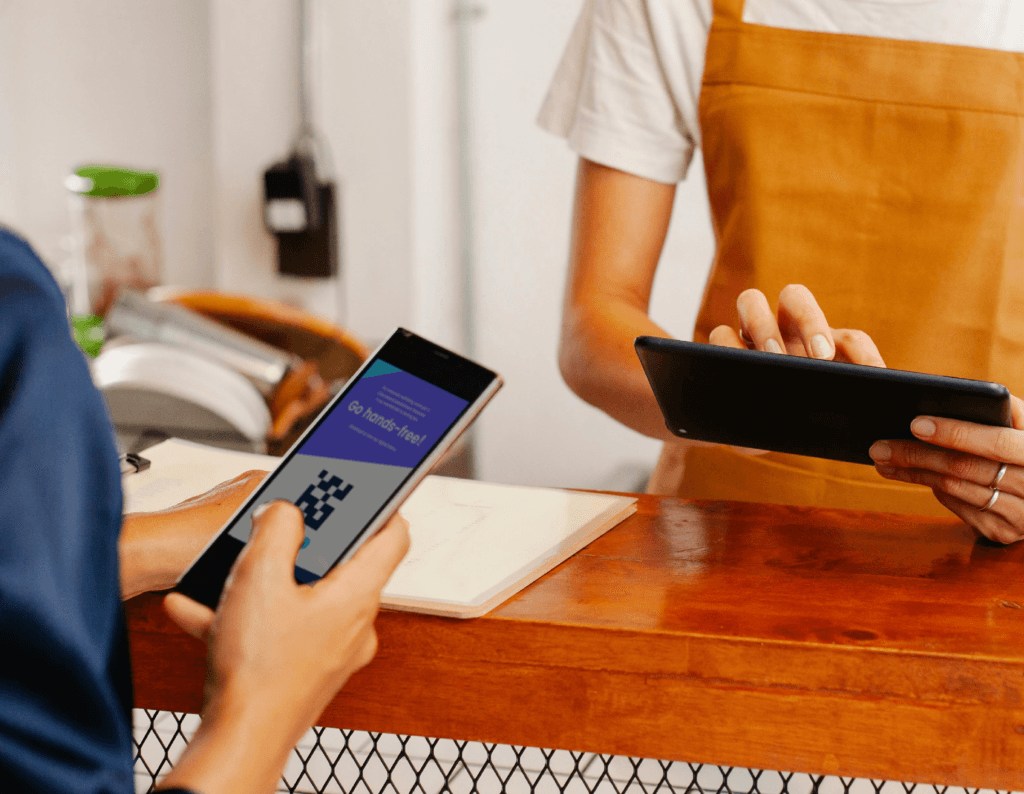
For international merchants, QR-based payments represent more than just an additional option. They are an opportunity for a low-cost route to broad market access, but they also require rethinking the checkout experience, particularly in mobile and cross-border contexts.
Perhaps the most significant development is the growing connectivity between national real-time payment systems. Countries across ASEAN are actively linking their domestic schemes, allowing users to send money across borders using familiar apps and local currencies.
For example, connections between Singapore’s PayNow and Thailand’s PromptPay enable cross-border transfers that are near-instant and far cheaper than traditional international payments. Similar linkages are emerging between Malaysia, Indonesia and other markets in the region.
“I can’t stress enough how important this is for cross-border commerce. It reduces reliance on international card networks and correspondent banking, lowers foreign exchange costs and simplifies the payment experience for regional consumers.” – Judith Loh
In practical terms, a customer in Bangkok can increasingly pay a merchant in Singapore using their domestic banking app, without needing a card or navigating complex international payment flows.
For merchants entering Southeast Asia, the rise of real-time payments is not just a technical detail. It is a strategic consideration that affects conversion, cost and customer experience.
First, localisation is essential. Supporting local payment methods, particularly wallets and real-time bank transfers, is key to reaching customers in each market.
Second, speed matters. Real-time settlement can improve cash flow and reduce operational friction, but it also requires adjustments to reconciliation, refunds and risk management processes.
Third, cross-border is being redefined. As regional payment systems become more interconnected, merchants have an opportunity to serve customers across multiple markets with fewer intermediaries and lower costs.
Finally, partnerships are critical. Navigating the fragmented landscape of payment methods, regulations and infrastructure often requires working with local payment providers or global platforms that aggregate these capabilities.
“Southeast Asia offers a glimpse into the future of payments. It is a region where real-time infrastructure, mobile wallets and cross-border connectivity are converging to create a faster, more inclusive and more efficient system.” – Judith Loh
For Western merchants, success will depend on recognising that this is not simply an extension of existing payment models. It is a fundamentally different paradigm, shaped by local behaviours and government-led innovation.
Those who adapt to this reality will not only unlock growth in Southeast Asia, but also gain insights that may well shape their global payments strategy in the years ahead.
Looking to enter into the Southeast Asia market? Get in touch and let’s see how we can help you achieve your expansion goals.