The travel industry is one of the most globalised sectors in the world. But behind every booking is a complex payments journey.
From cross-border transactions and multiple currencies to high chargeback exposure and long booking windows, travel businesses face unique payment challenges that many providers aren’t built to handle.
That’s why choosing the right merchant account for travel isn’t just a technical decision — it’s a growth decision. The right setup can improve approval rates, reduce risk and support international expansion.
What’s in this blog:
What is a travel merchant account?
Why is the travel industry classed as high-risk?
How can travel businesses reduce risk and chargebacks?
Why global payment capabilities matter in travel
What is a travel merchant account?
A travel merchant account is a type of payment processing solution designed specifically for businesses operating in the travel sector.
This includes:
Online travel agencies (OTAs)
Tour operators and travel agencies
Hotels and accommodation providers
Car rental companies
Airlines, cruise lines and transport providers
Holiday packages
City tours
However, keep in mind that there could be other travel business models not mentioned in the list above.
In simple terms, it allows travel businesses to accept and process payments online, often across multiple countries and currencies, while managing the higher levels of risk that go hand-in-hand with the industry.
Unlike standard merchant accounts, travel payment processing requires additional considerations such as fraud prevention, chargeback management and international payment acceptance.
Why is the travel industry classed as high-risk?
Travel is considered a high-risk industry by many acquiring banks and payment providers globally, not because it’s unstable, but because of how it operates at scale. These are the main reasons why:
High cancellation rates: Travel plans can change quickly. Whether due to personal circumstances or global events, cancellations are common and often lead to refunds or disputes.
Long booking windows: Customers frequently pay weeks or months in advance. This creates a longer exposure period where something can go wrong or the customer could change their mind, increasing the likelihood of chargebacks.
High transaction values: Travel purchases are typically higher in value than standard ecommerce transactions, which inevitably increases both fraud risk and financial exposure.
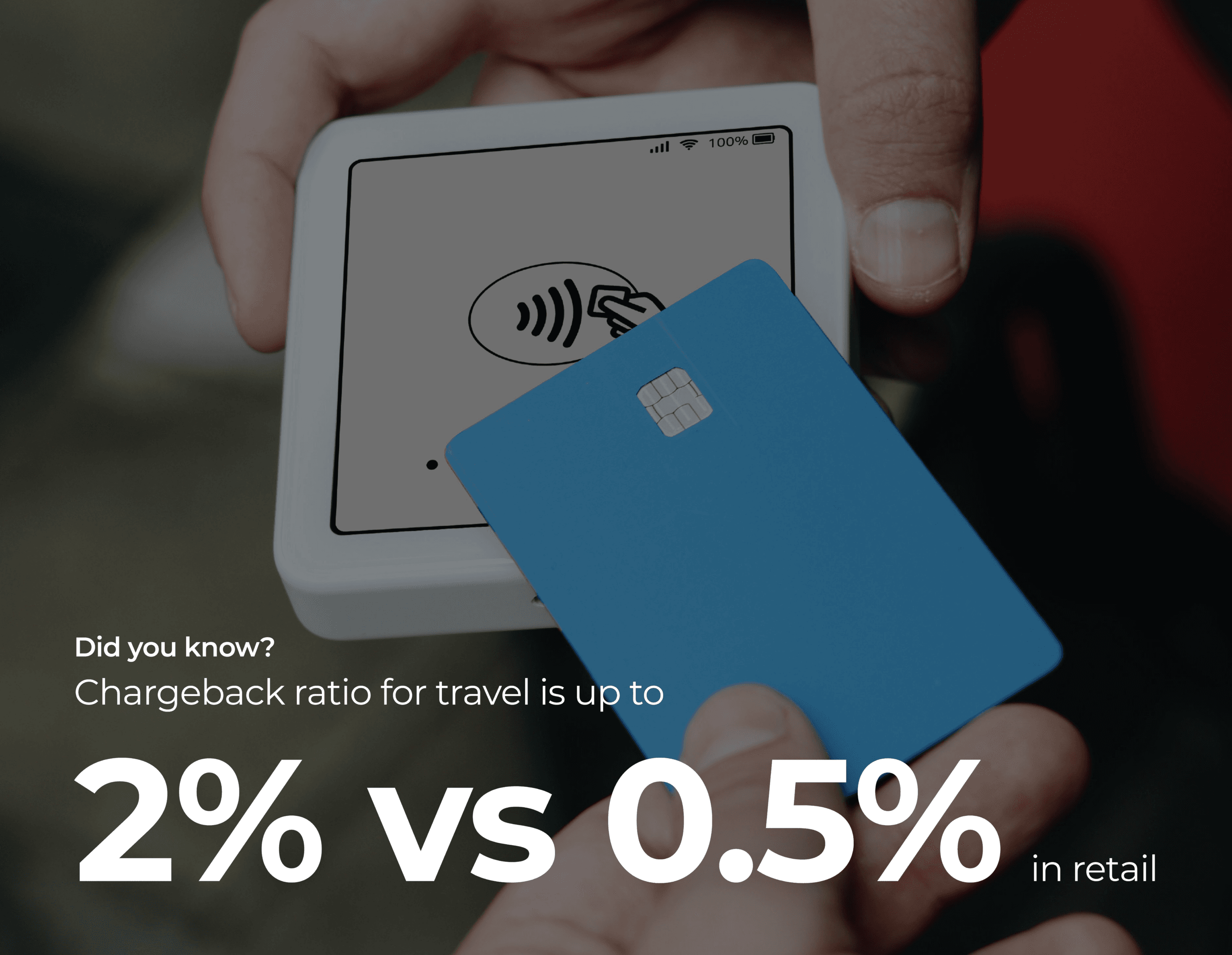
Chargeback behaviour: Many travellers go directly to their bank instead of requesting a refund, often because they don’t understand the difference between a chargeback and a refund. This leads to higher chargeback ratios.
Cross-border complexity: Travel payments are inherently international. A customer in one country may book a service in another, using a card issued elsewhere, adding layers of fraud risk, compliance requirements and approval challenges.
Currency and FX exposure: Handling multiple currencies can become an operational headache with inconsistent pricing experiences and additional risk if not managed correctly.
How can travel businesses reduce risk and chargebacks?
All online businesses should be aware of the possible risks when selling online. That’s why we recommend that all online merchants adopt at least the basic fraud protection measures. Accordingly, high-risk businesses should be extra vigilant and take additional fraud protection measures if necessary.
Here are a few tips which can help prevent fraud and minimise the risk of chargebacks:
Work with a specialist payment provider: Choose a partner with experience in travel payment processing and high-risk industries. They should understand the nuances of travel business models and offer tailored support with an experienced risk management team and comprehensive fraud tools.
Leverage global acquiring: Access to local acquiring in key regions (such as the EU and APAC) can improve authorisation rates, reduce cross-border fees and minimise false declines.
Implement strong authentication (3D Secure): Integrating 3D Secure is a must for every high-risk online business. It is an extra layer of protection in the payment process by verifying the customer’s identity, helping reduce fraud and shift liability away from the merchant.
Monitor transactions proactively: Always monitor transactions and look out for any inaccuracies or red flags to prevent fraud before it escalates.
Prioritise customer support: Fast, responsive customer service can significantly reduce chargebacks. If customers can easily request refunds or changes, they’re less likely to go to their bank.
Stay ahead of industry trends: Payments and fraud tactics evolve quickly. Staying informed helps you adapt and protect your business. Nomupay's blog could be a great place to start – We have prepared a bunch of informative articles about fraud prevention and chargebacks, all of them can be found here.
Why global payment capabilities matter in travel
Travel businesses don’t operate in a single market — and neither should their payments.
Customers expect to:
Pay in their local currency
Use their preferred payment method
Experience a smooth, frictionless checkout
Without the right international payment processing setup, businesses may face:
Lower approval rates for international cards
Higher processing costs
Increased fraud and false declines
Poor customer experience at checkout
A global acquiring strategy helps solve this by enabling:
Better acceptance rates across regions
Localised payment experiences
More efficient cross-border transactions
For travel merchants looking to grow internationally, this isn’t optional, it’s essential.
Final thoughts
The travel industry presents huge opportunities, but also unique payment challenges.
From managing chargebacks to navigating cross-border transactions, having the right travel merchant account in place can make a significant difference to both performance and scalability.
For businesses expanding internationally, payment infrastructure becomes a key competitive advantage.
At Nomupay, we work with travel merchants to:
Improve payment acceptance rates
Reduce chargeback risk
Enable seamless cross-border payments
Support global growth
If you’re looking to optimise your payment setup or expand into new markets, it may be time to rethink your approach to payments. Get in touch!